

Digital accessibility is about making technology and digital platforms user-friendly for everyone, regardless of disability. By designing and building accessible products and services, we are taking a step towards a more inclusive and equal society where everyone can participate on equal terms.
It is particularly important to keep an eye on accessibility in view of the upcoming legislative change that will come into force in 2025. The law strengthens the accessibility requirements for digital products and services – a positive thing that will help improve the lives of many people. But do you know if your business is covered by the new law and if so, how to comply with these requirements? Now is the time to get to grips with it.
Why is accessibility important?
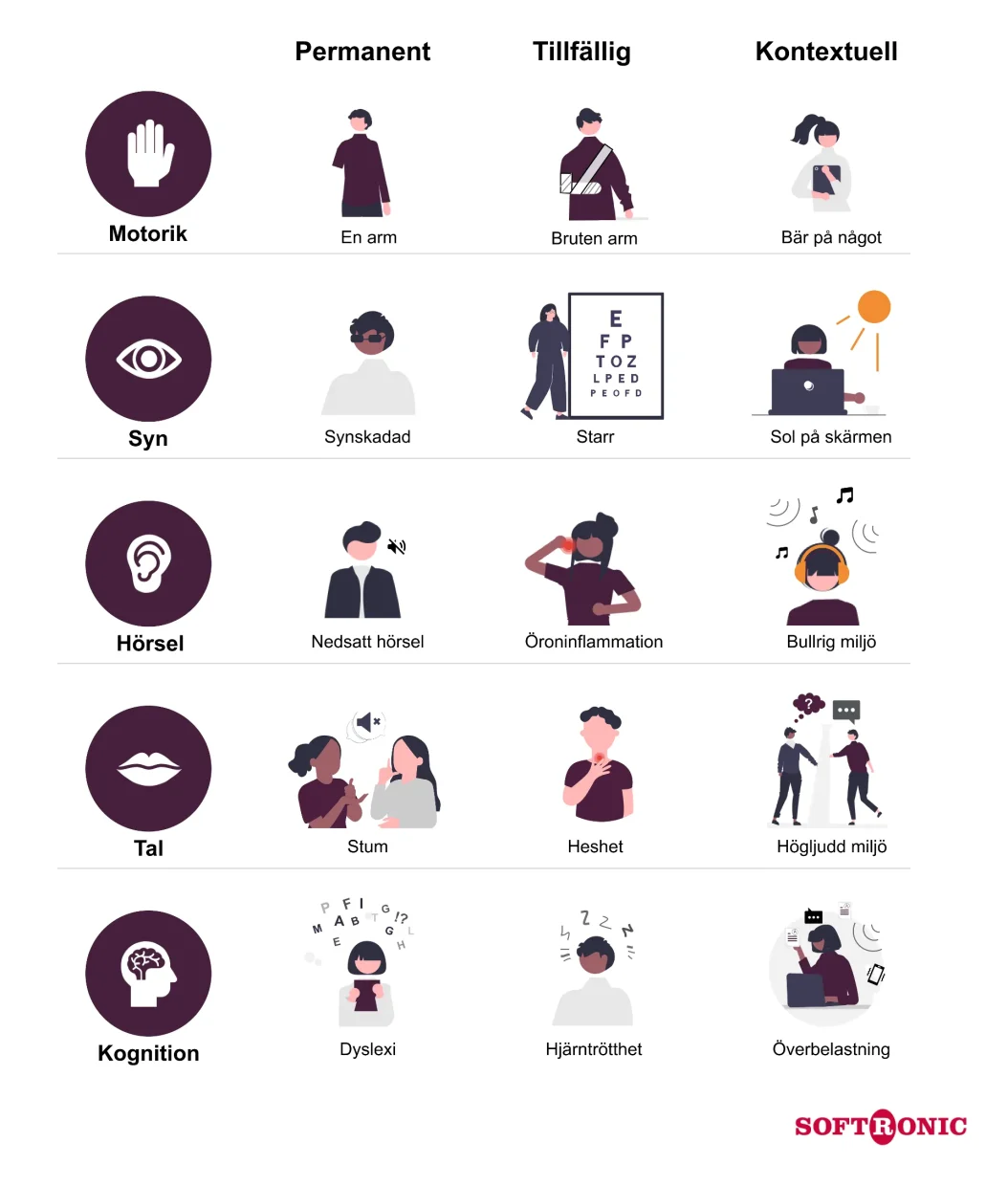
Today, the internet is a big part of everyday life for most people – things like being able to shop for food, manage your finances or apply for a job online are taken for granted. But consider this: around 20% of the world’s population face difficulties when using digital products due to various forms of disability such as visual, hearing or mobility impairments. In addition, around 20% of the population is neurodivergent, including those with dyslexia, ADHD and autism, which can also make it difficult to perform these types of tasks. Then there are also temporary or contextual disabilities that can make it temporarily difficult to handle digital products. For example, having a broken arm or trying to watch a video in a noisy environment without text. It can also involve reading text on a screen in direct sunlight. An accessible digital product is vital for some people, but good for everyone as it contributes to a good user experience whether it is permanent, temporary or contextual.
With this in mind, ignoring accessibility issues is not beneficial from a business point of view as it risks excluding potential customers and thus losing revenue – a service that is easy to use and user-friendly for a wide target group is a competitive advantage.
In short, digital accessibility is important for several reasons: ethically, it is about creating a fairer world where everyone can participate on equal terms. From a business perspective, it is also beneficial to offer a good user experience to the widest possible audience. But there are also other factors to consider: a significant one is the aforementioned Accessibility Directive, which will enter into force in 2025.
What does the upcoming change in the law mean?
Web accessibility is already a legal requirement for public authorities and essential services (the DOS Act), but this is now also extended to commercial products and services. The new law is called the Act on the Accessibility of Certain Products and Services and will enter into force on June 28, 2025. The Parliament’s website states the following about the new legislation: “This Act contains provisions on requirements for certain products and services in terms of their accessibility. The purpose of the Act is to remove and counteract obstacles to effective competition and to promote equality of living conditions and participation in social life.”
The following services are covered:
- E-commerce services (basically any digital service that sells something remotely to consumers)
- Banking services for consumers (e.g. online banking and information material)
- Certain travel services related to passenger transport (e.g. websites, apps and electronic tickets)
- Electronic communication services (e.g. email, chat, SMS, phone calls, connection and subscriptions)
- E-books
- Audio and video media services (e.g. television, radio, film, music, video and computer games)
The following products are covered:
- Computers and operating systems (e.g. personal computers, smartphones and tablets)
- Self-service machines (e.g. ticket machines)
- Tablets
- Card readers and terminals, (e.g. for payment or cash withdrawal)
- Equipment used to access communication services (router, modem, smartphones)
- Equipment used to access media services (e.g. set-top boxes and smart TVs)
How do we achieve accessible digital services?
An important part of creating accessible products is following international accessibility guidelines and standards, such as the Web Content Accessibility Guidelines (WCAG). This includes, for example, ensuring sufficient contrast of colors for readability, using alternative text for images for screen readers, and providing keyboard navigation capabilities. WCAG is based on four overarching principles that describe what an accessible website should be:
- Comprehensible – All information should be easy to understand and should be available in a variety of formats, such as text alternatives to video or reading options to text.
- Manageable – Everyone should be able to manage and access the information on the website – for example, it should be possible to navigate the website using only a keyboard.
- Comprehensible – The content of the page should be readable, understandable and the functionality predictable. This means, for example, that navigation should be consistent and that the user should be helped to avoid and correct mistakes.
- Robust – A website should be compatible with different types of user programs, browsers and assistive technologies.
There are several guidelines linked to these four principles and how well they are met determines the level of WCAG achieved. There are three levels: A, AA and AAA. It is important to know and keep these guidelines in mind from the start, both in terms of design and development, to reduce the risk of having to make extensive changes at a later stage.
What happens if you don’t meet the requirements?
When the Accessibility Directive enters into force, there are legal consequences for businesses that provide products on the market that do not meet the requirements. They may be subject to penalties of between SEK 10,000 and SEK 10 million. If there are several deficiencies, there may be several penalties. Depending on the type of deficiencies, the measures can be time-consuming, so it is important to get started as soon as possible. However, there are some exceptions to the accessibility requirements, for example for small organizations with less than 10 employees. You can read more about the exceptions on digin.nu.
How can we help?
Softronic’s ambition is to be a leader in offering innovative digital solutions that help companies and organizations create real social benefit. Together with our customers, we work for the digitization of society and thereby contribute to a more sustainable future. This is what we call GoodTech.
Are you covered by the legal requirements for digital accessibility or want to start working on online inclusion? We offer different options tailored to your business needs. Find out more about our accessibility audit offer!
Blog post written by the UX team: ux@softronic.se.